
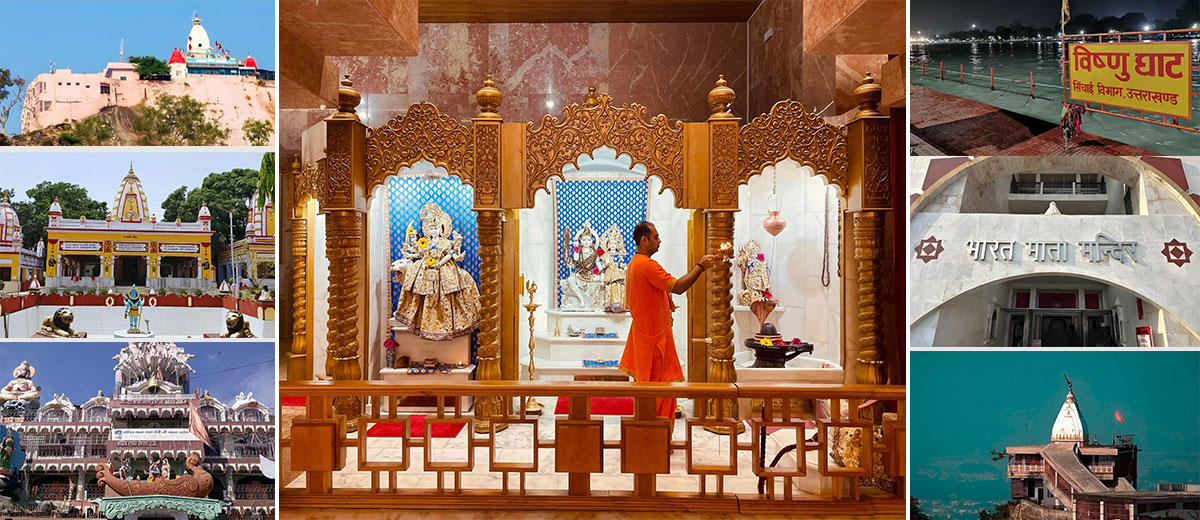
Temples of the Haridwar Circuit
For the traveler seeking a truly profound connection, the "refined" experience is found in the transitions between these sites:
- 1. Mansa Devi Temple (Bilwa Parvat) Perched atop the Bilwa Parvat, this temple is dedicated to the goddess Mansa, the mind-born daughter of Sage Kashyapa.
- 2. Chandi Devi Temple (Neel Parvat) Sitting across the Ganges on the "Blue Mountain," this temple was built in 1929 by the King of Kashmir, though the main idol is said to have been established by Adi Shankaracharya in the 8th century.
- 3. Maya Devi Temple (The Adhishtatri) Located in the heart of the city, this is one of the three most ancient shrines in Haridwar. As a Shakti Peetha, it is believed to be where the heart and navel of Goddess Sati fell.
- 4. Daksha Mahadev Temple (The Ancient Legend) Located in the historic town of Kankhal, about 4km from the main city, this temple is a masterpiece of mythology and architecture.
- 5. Bharat Mata Mandir (The Unique Vision) A modern architectural marvel, this eight-story temple is dedicated to the spirit of India rather than a specific deity.
- Sapt Rishi Ashram - Sapt Rishi Ashram, located at a distance of approximately 5 km from Har ki Pauri, is one of the most famous ashrams of Haridwar. Hindu Mythology states that the ashram is located, where the seven great sages or Sapt-Rishis, Kashyap, Vashisht, Atri, Vishwamitra, Jamadagni, Bharadwaja and Gautam used to meditate. It is also said that the River Ganges at this place split herself into seven streams, so that the seven sages mediating here would not be disturbed by her flow. Owing to this reason, this place is also known as the Sapt Sarovar or Sapt Rishi Kund. All the seven streams reunite further ahead and flow as Neel Dhara, which forms a beautiful channel while entering Haridwar.
- The Morning Silence: Beginning at Kankhal, the older, quieter suburb of Haridwar. Here, the air is thick with the scent of damp earth and dhoop (incense) from the Daksheshwar Mahadev temple.
- The Mid-day Vista: Utilizing the ropeway during the "golden hour" to witness the Shivalik hills turning a hazy purple as the sun reflects off the winding silver ribbon of the Ganges below.
- The Evening Resonance: Concluding at Har Ki Pauri for the Maha Aarti. While the crowd is dense, a refined tour secures a private "ghat-side" seat where the rhythmic chanting of the Ganga Lahiri and the warmth of a thousand flickering oil lamps create a transcendental finale.
- Pradakshina (circumambulation). Whether it is walking around an ancient Banyan tree or a marble sanctum, the movement mimics the flow of the river—constant, rhythmic, and purposeful.
Pro-Tip for a "Classy" Tour: To avoid the crowds and the heat, it is best to start the Mansa Devi and Chandi Devi circuit early in the morning (around 7:00 AM). The morning light provides the best clarity for photography from the hilltops, and the air remains crisp, making the spiritual experience much more tranquil and refined.